












Webinar Playback:
What Should You Know About Selecting Appropriate Regional Proportions?
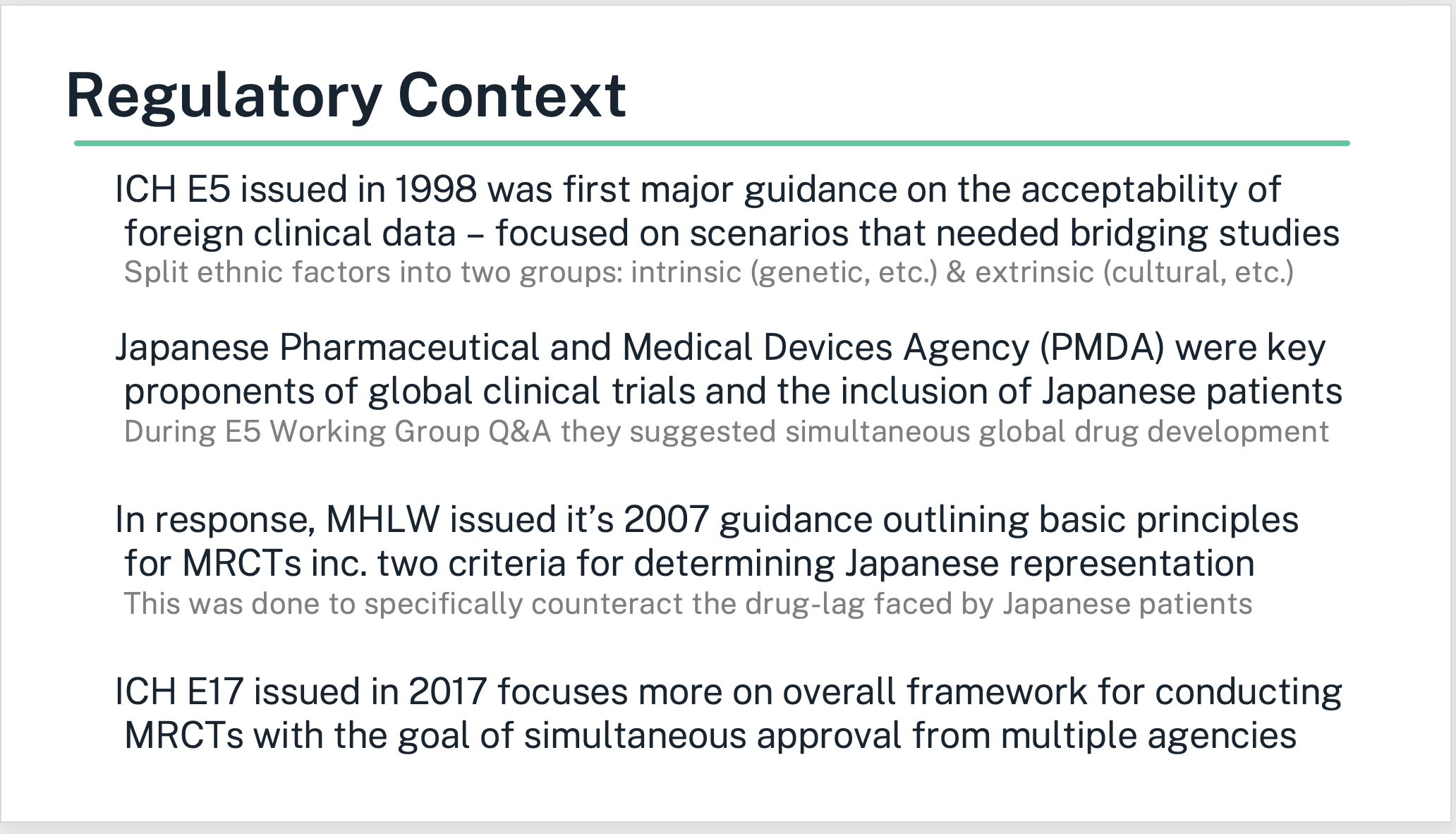
A multi-regional clinical trial (MRCT) is a clinical trial conducted in more than one region under a common protocol. Traditionally, drug development occurred in a single jurisdiction, and expanding to other regions required bridging studies to ensure consistent efficacy and safety. This often resulted in delays before new therapies reached patients.
MRCTs are now increasingly used to improve efficiency, reduce redundant trials, and accelerate regulatory approvals worldwide. Regulators, including Japan’s PMDA, have provided guidance on patient allocation for sub-regions, including two recommended methods.
In this webinar, Denis Desmond, Research Statistician at nQuery, explores sample size allocation in MRCTs, bridging studies, and regulatory guidance, with practical demonstrations in nQuery.
Learning objectives:
In this webinar, you will learn how to navigate the complexities of multi-regional clinical trials, empowering you to optimize sample size allocation, meet regulatory guidance, and conduct efficient, globally aligned studies.
What Key Areas Are Covered in This Webinar?
1. What Are Multi-Regional Clinical Trials (MRCTs)?
-
Define MRCTs and their role in global drug development
-
Recognize the differences between single-region trials and MRCTs
- Understand the challenges and opportunities of conducting MRCTs
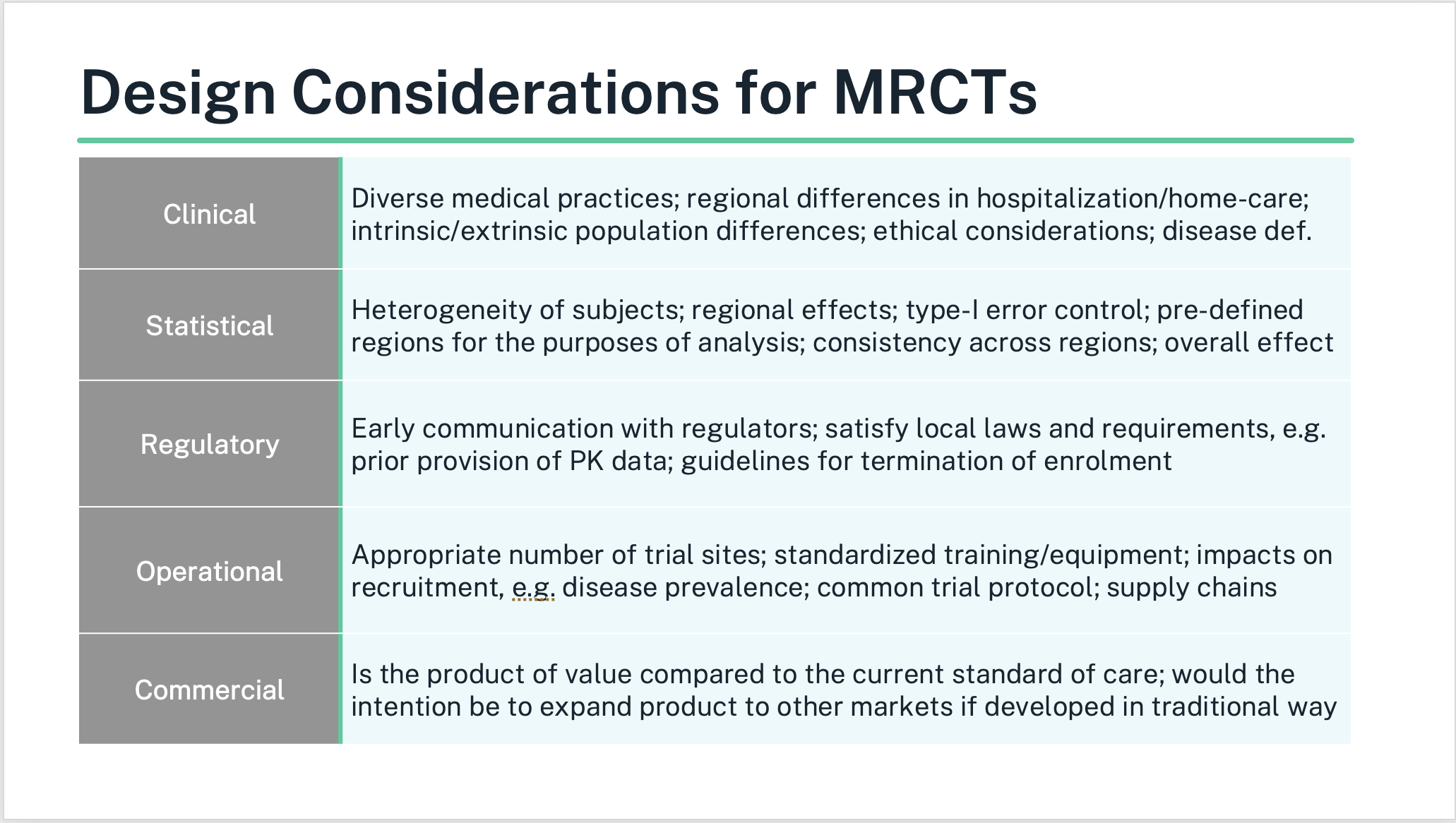
2. What Are the Main Design Considerations for MRCTs?
-
Learn how to plan trials that satisfy regulatory requirements across regions
-
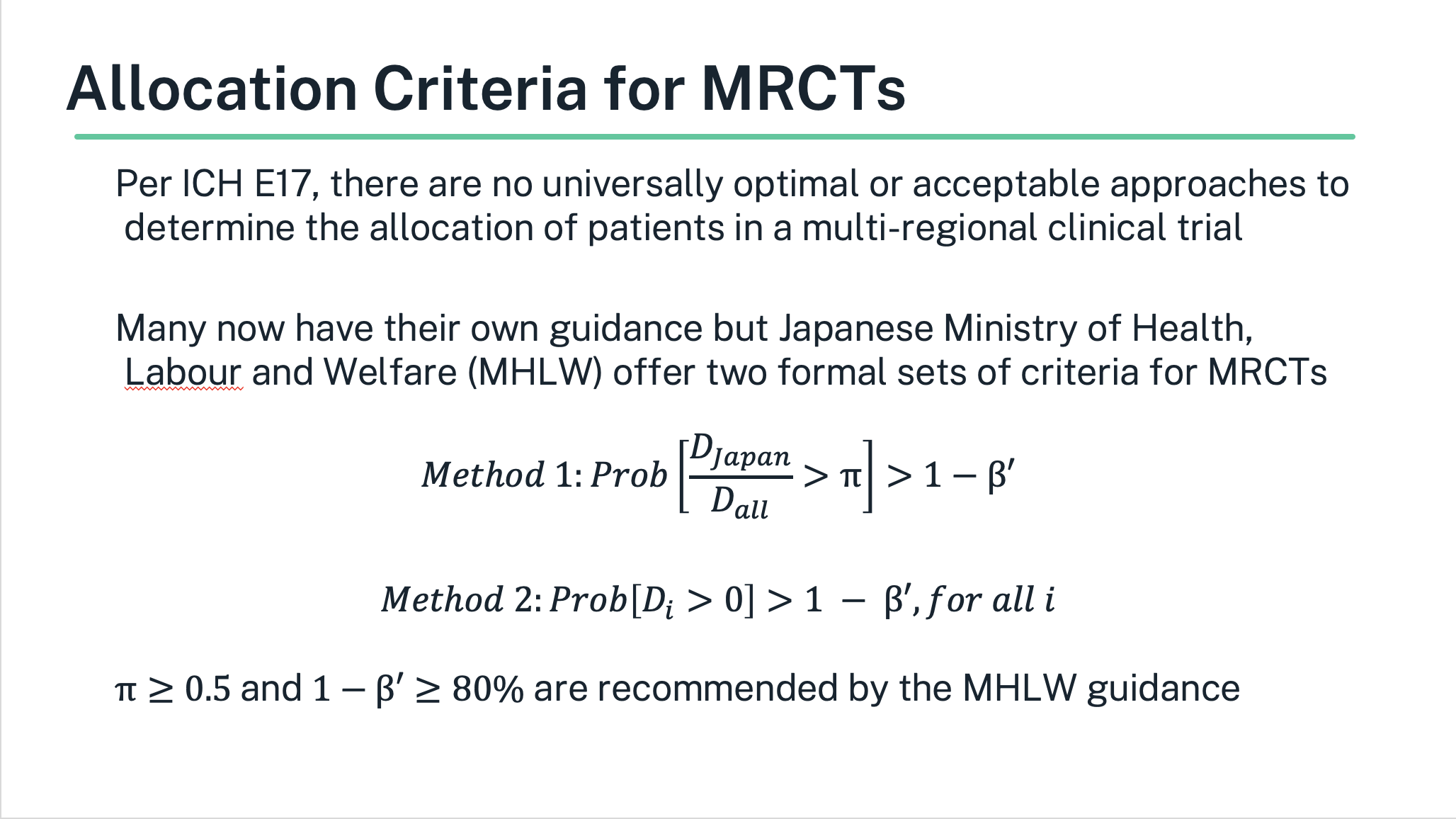
Identify criteria for patient allocation in sub-regions
-
Understand strategies to optimize trial efficiency while maintaining scientific rigor
3. How Do Bridging Studies and Regulatory Guidance Influence MRCTs?
-
Understand the historical role of bridging studies
-
Explore PMDA guidance and two proposed methods for regional sample allocation
-
Recognize how regulatory guidance can inform trial design
4. How Is Practical Sample Size Determination Conducted in nQuery?
-
Apply PMDA Methods 1 & 2 to real-world examples
-
Demonstrate how to allocate patients appropriately across regions
-
Use nQuery for accurate, reproducible sample size calculations
How Do Sample-Size Allocation Strategies Impact Multi-Regional Clinical Trials?
What Are the Regulatory Principles and Practices Behind MRCT Sample-Size Allocation?
Effective sample-size allocation is central to the planning and success of multi-regional clinical trials (MRCTs). Because MRCTs are designed to generate evidence that is acceptable across multiple regulatory regions, they must balance global efficiency with the ability to demonstrate regionally consistent treatment effects.
The principles discussed in the MRCT sample-size allocation guide highlight the need for careful prospective planning, transparency, and structured decision-making. These elements ensure that the statistical conclusions drawn from geographically diverse patient populations remain reliable and supportive of global submissions.
This section outlines how modern sample-size allocation strategies shape MRCT design and execution, emphasizing key principles, areas of focus, and implications for researchers and statisticians.
Why Is Sample-Size Allocation Important in MRCTs?
Sample-size allocation methods help ensure that a trial achieves its overall objectives while meeting the evidentiary expectations of multiple regulatory authorities. Allocation influences the degree to which results can be interpreted regionally, the precision of treatment-effect estimates within each area, and the overall credibility of conclusions.
The referenced guide stresses:
-
The importance of ensuring that each region contributes meaningfully to the global evidence base.
-
The need for pre-defined allocation strategies that reflect expected regional variability and operational feasibility.
-
The role of statistical justification in supporting allocation decisions that align with regulatory requirements for consistency and clinical relevance.
For researchers, sample-size allocation is both an analytical and strategic responsibility — affecting trial power, timelines, operational logistics, and regulatory acceptability.
What Are the Key Considerations When Allocating Sample Size in MRCTs?
Sample-size allocation in a multi-regional setting presents unique challenges that require careful planning and justification. The guide emphasizes that sponsors must demonstrate that allocation decisions are scientifically defensible and operationally practical.
Important considerations include:
-
Defining contribution requirements for each region to ensure sufficient representation and evaluability.
-
Assessing expected variability in treatment effects across regions and incorporating this into allocation planning.
-
Balancing global power with regional precision, recognizing that overly small regional samples may limit interpretability.
-
Prospective documentation of allocation strategies, rationales, and assumptions.
These elements ensure that MRCT results are robust and interpretable across geographical areas.
What Special Topics Influence MRCT Sample-Size Allocation?
The guide also discusses methodological and operational topics that influence allocation decisions, including:
-
Variability in regional treatment response, which may impact whether proportional, strategic, or optimized allocation is appropriate.
-
Regulatory expectations for regional consistency, requiring sample sizes that can meaningfully contribute to subgroup assessments.
-
Use of quantitative methods and modeling to evaluate different allocation scenarios and their impact on trial objectives.
-
Operational constraints, including recruitment feasibility and region-specific timelines, which can influence final allocation plans.
These considerations show how methodological rigor must align with practical challenges in global drug development.
What Are the Practical Implications of Sample-Size Allocation for MRCT Design?
Sample-size allocation decisions have direct consequences for MRCT planning, execution, and regulatory review. Trial teams must ensure that allocation strategies are clearly justified, statistically sound, and operationally achievable.
Key implications include:
-
Allocation must be integrated early into protocol development to guide region selection, recruitment planning, and timelines.
-
Trial governance should ensure that allocation assumptions are continuously monitored for feasibility.
-
Regulatory interactions may focus on whether regional sample sizes adequately support consistency assessments and overall interpretability.
Planning with these principles in mind minimizes regulatory risk and strengthens the global evidence generated by the trial.
What Are Best Practices for Biostatisticians Working on MRCTs?
To align MRCT designs with best practices in sample-size allocation, statisticians should:
-
Develop a strong understanding of regional evidentiary requirements and how they influence allocation needs.
-
Evaluate multiple allocation scenarios through quantitative assessment or modeling.
-
Ensure assumptions regarding regional variability, recruitment, and contribution requirements are explicitly documented.
-
Provide clear statistical justification for the chosen allocation approach.
-
Coordinate closely with operational teams to balance scientific and logistical considerations.
By applying these practices, researchers can design MRCTs that are both efficient and capable of meeting global regulatory standards.
What Should You Know About nQuery?
nQuery helps make your clinical trials faster, less costly and more successful. So if you need something more than just a sample size calculator, nQuery is an end-to-end platform covering Frequentist, Bayesian, and Adaptive designs with 1000+ sample size procedures.
What Solutions Does nQuery Provide?
Sample Size & Power Calculations
Calculate for a Variety of frequentist and Bayesian Design